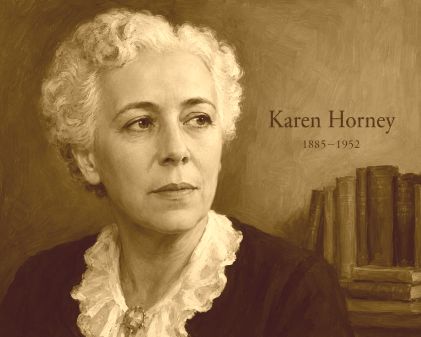
Based on her research and clinical experience as a psychoanalyst, Horney developed a theory of the causes and structures of chronic mental health disorders.
The diverse range of mental health disorders and illnesses she refers to includes almost all conditions, such as anxiety disorders, bipolar disorder, social anxiety disorder, depression, and social withdrawal, and at the time, these were collectively called neuroses, neurotic individuals, or neuroses.
Horney concluded that the causes and structures of chronic mental health disorders are as follows:
Individuals with mental health disorders often grow up under disadvantaged circumstances, developing deep-seated anxiety during childhood. Horney coined the term “basic anxiety” to describe this deep-seated anxiety cultivated in childhood.
Children experiencing this “basic anxiety” develop a unique mental and personality structure characteristic of individuals with mental health disorders in order to suppress or escape their anxiety.
At its core is self-idealization (the pursuit of glory), from which phenomena and structures such as psychiatric demands (formerly known as neurotic demands), psychiatric pride (formerly known as neurotic pride), the tyranny of “shoulds” (how I should be), self-loathing, and self-contempt develop.
While these mental structures and disorders of individuals with mental health disorders manifest in various patterns depending on the prioritization and combination of three main methods for dealing with problems and interpersonal relationships, the fundamental structural principles remain common.
Horney’s three methods are: 1. Seeking dominance and victory (expansionary type), 2. Seeking love and harmony (contractionary type), and 3. The idea of giving up and retreating (a type of social withdrawal) makes perfect sense to me, both from my own experience and observations of others.
I think this is a wonderful theory, much like how diverse colors of light are made up of three primary colors.
It’s similar to how, in physics and other fields, when the theory becomes deep and advanced, phenomena that initially seem completely separate and unrelated are actually connected at a deeper level by a common theory.
These are:
Unfortunate childhood environment -> Basic anxiety -> Self-idealization (pursuit of glory) -> Mental health disorder-like mental structure (formerly known as neurotic) -> Onset of symptoms of mental health disorder
Chronic mental health disorders involve “basic anxiety” + “mental health disorder-like mental/personality structure (formerly known as neurotic).”
Mentally healthy individuals have “basic security” + “healthy mental/personality structure.”
Based on Horney’s theory, for individuals with mental health disorders to improve their symptoms, it is necessary to reduce “basic anxiety” and improve their “mental/personality structure,” but this is not easy.
Just like with physical illness, the more severe the condition, the more difficult improvement and treatment become.
If we were to compare these to physical disabilities, would it be like the following vicious cycle?
- Due to an unfavorable diet during childhood, a person suffers from malnutrition and poor health.
- As a result, he gradually began injecting himself with stimulants he had at home year-round, which allowed him to live and grow like other children despite his malnutrition.
- However, as he grew older, he began to experience side effects from the stimulants.
- But if he stopped taking the stimulants, he would collapse due to malnutrition.
- He tried to reduce the amount of stimulants and eat a normal, healthy diet, but his digestive system was damaged from his poor diet during childhood, making it impossible for him to eat normally.
コメント