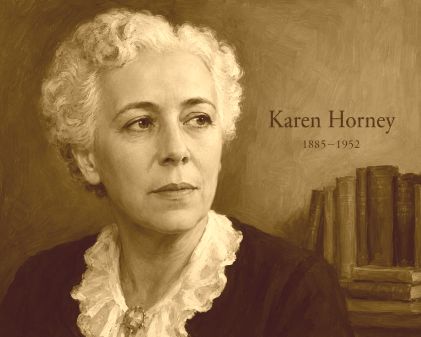
Horney’s renowned work, “Neurosis and Human Growth,” is structured as follows: It consists of a preface and 15 chapters.
Preface: The Morality of Self-Actualization
Chapter 1: The Pursuit of Glory
Chapter 2: Neurotic Demands
Chapter 3: The Tyranny of “Shoulds”
Chapter 4: Neurotic Pride
Chapter 5: Self-Loathing and Self-Contempt
Chapter 6: Self-Alienation
Chapter 7: General Means of Tension Relief
Chapter 8: Self-Expanding Solutions—Seeking Dominance
Chapter 9: Self-Depressing Solutions—Seeking Love
Chapter 10: Pathological Dependence
Chapter 11: Resignation—Seeking Freedom
Chapter 12: Neurotic Disorders in Human Relationships
Chapter 13: Neurotic Disorders in the Workplace
Chapter 14: The Path of Psychoanalytic Therapy
Chapter 15: Theoretical Considerations
In Chapter 1, “The Pursuit of Glory,” Horney defines and explains the “basic anxiety” experienced by children growing up in disadvantaged environments, and describes the process by which children develop self-idealization and obsessive personality structures to escape this basic anxiety.
He then discusses the significant role that fantasy plays in this self-idealization (the pursuit of glory).
Regarding the role of fantasy, I also loved to daydream as a child.
I often spent long hours daydreaming, imagining myself as the main character in anime, tokusatsu (special effects) superhero TV shows and movies, pacing around the same spot in my yard.
Horney states that people with mental health disorders (formerly known as neurotics) have a strong desire to escape anxiety, and in an attempt to realize an idealized self, they detach themselves from reality and enter a world of fantasy.
This makes sense to me, both when I look at myself and my parents.
Due to anxiety and other mental issues, they cannot accept reality as it is and instead escape into a fantasy world.
My mother has a severe mental health disorder and suffers from panic attacks and hysteria, but she doesn’t acknowledge that she has such problems. Instead, she enters a detached fantasy world where she feels she has no problems at all, and it seems to me that she is trying to find mental stability there. In the words and actions of Dr. Masatake Morita and in Morita therapy, the Buddhist term “facts are the only truth” is used. I believe this term also means that one must leave the fantasy world of those with mental health disorders.
Perhaps it also means that facts and reality are the truth, not the world of fantasy, and that one must live in the factual, real world, and stop escaping into and constantly dwelling in a detached, fantastical world?
コメント